
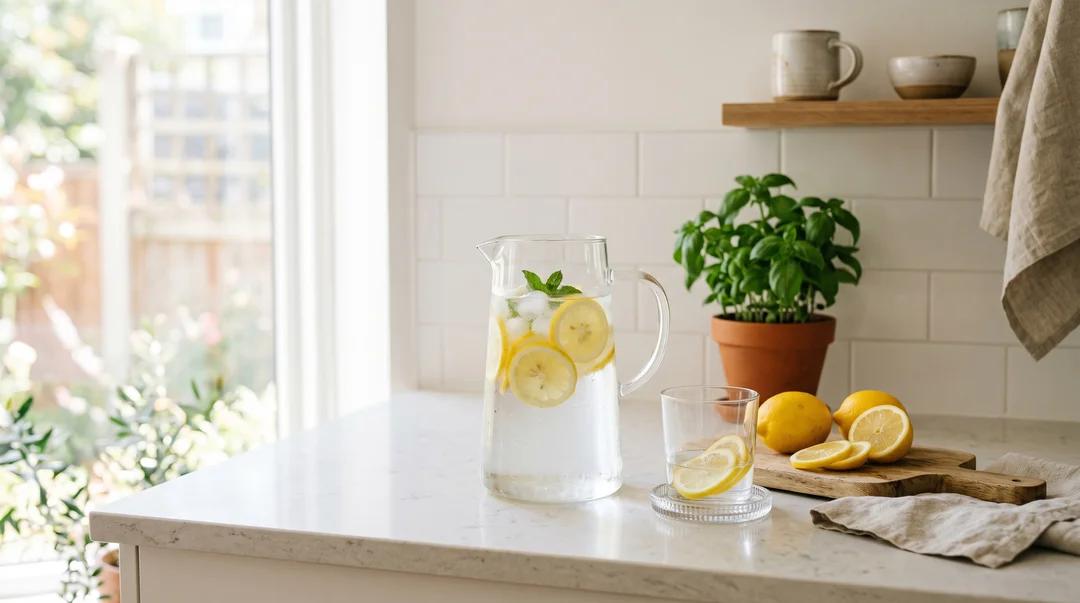
If you have ever told yourself "I will drink more water this week" and forgotten by Tuesday, you are not lazy. You are fighting friction. Drinking enough water is rarely a willpower problem, it is a logistics problem. The fix is to remove every reason your brain has to skip a glass. Here are 8 tricks that work because they do not rely on motivation.
Why most "drink more water" advice fails
The standard advice (drink 8 glasses, set a goal, buy a bigger bottle) ignores the actual reasons people undershoot:
- Water is out of sight, out of mind during a busy day.
- Plain water tastes like nothing, and the brain dismisses neutral flavors.
- A 1-liter goal sounds easy until 3 p.m., when 800 ml is still in the bottle.
- Hydration is invisible until it is gone. There is no immediate reward.
Willpower runs out fast. Habits and environment do not. The 8 tricks below are environmental, not motivational.
Trick 1: Make water visible everywhere you sit
A bottle on your desk. A glass by your bed. A pitcher on the kitchen counter. The single biggest predictor of how much water you drink is whether you can see it without standing up. Move the bottle into your line of sight and intake climbs without conscious effort.
Trick 2: Anchor water to existing habits
Tie a glass of water to something you already do every day: brushing your teeth, your first coffee, sitting down to eat, leaving a meeting. Each anchor is one more glass without remembering. Five anchors equals 5 glasses without thinking about hydration once.
Trick 3: Track for 2 weeks, then stop
A simple checkmark grid on paper or in a notes app for 14 days. Not forever. Just long enough for the habit to lock in. After 2 weeks, most people drink the target amount automatically and the tracker becomes unnecessary.
Trick 4: Find a flavor that works for you
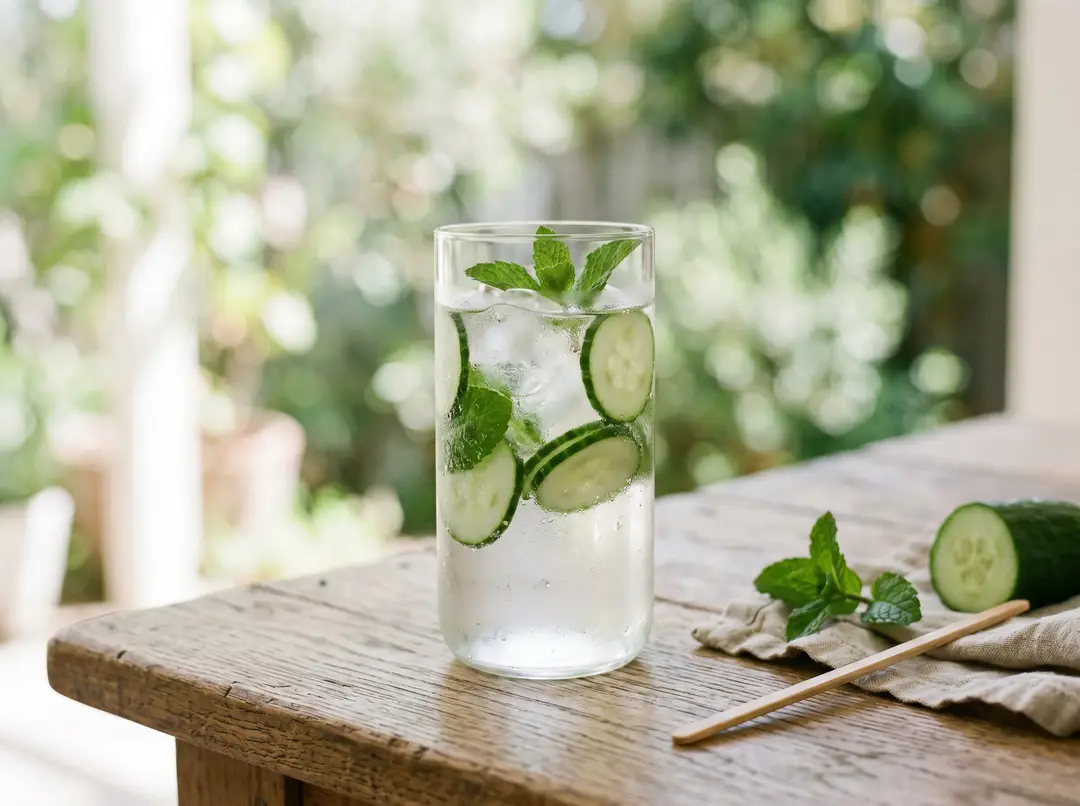
Plain water tastes like nothing, which is exactly the problem. A slice of lemon, cucumber, or a sprig of mint changes the experience without adding sugar. Cold-brew herbal tea (chamomile, hibiscus, peppermint) counts as water with personality. Avoid sweeteners and juice, they create a cycle of sweetness craving that makes plain water feel worse.
Trick 5: Use a bigger glass, not more frequency
Three 500 ml glasses beats six 250 ml glasses because each requires less effort to start. Fewer trips to fill, fewer decision points, same volume. The 500 to 750 ml range hits a sweet spot for most people.
Trick 6: Pick a temperature you actually want
Some people only drink water cold. Others avoid it cold because it feels jarring. Some like it warm or room temperature. There is no metabolic advantage to one over the other (the calorie cost of warming cold water is negligible). Pick the version you reach for without flinching.
Trick 7: Pre-pour the night before
Fill a glass and put it on your bedside table before sleep. Drink it before getting out of bed in the morning. This single move handles the 6 to 8 hour overnight dehydration that leaves morning urine dark (see the urine color hydration chart for why this matters). Some people add a pinch of salt for electrolytes, especially after a longer fast.
Trick 8: Pair water with a daily ritual you never skip
Brushing teeth. Walking the dog. Sitting down at your desk. The trick is to pair drinking water with something you would never forget to do anyway. The water becomes part of the ritual, not a separate task that competes for attention.
How to know it is working
You do not need an app or a scale. Three signals tell you within a week if the tricks are landing:
- Steadier energy through the afternoon, fewer 3 p.m. slumps.
- Less constipation, more regular digestion.
- Pale lemonade urine by midday. Dark yellow means under target. Completely clear can mean over-hydration. The urine color hydration chart shows what each shade actually means.
If you want a baseline number to aim for, the complete hydration guide covers personalized calculations based on body weight, activity, and climate.
When you do not need to chase 2 liters
The 8-glasses rule is a myth, and these tricks should not pull you into over-correction. About 20 percent of your daily water comes from food. On a day of soups, watermelon, smoothies, and salad, you may need less plain water than usual.
If you are intermittent fasting, the calculus shifts the other way: fewer meals means less water from food, so plain water intake goes up. Pair longer fasting windows with electrolyte balance during fasting, especially sodium.
For the full myth-busting on water targets, the 8-glasses-of-water myth article covers where the rule came from and why it is misleading.
FAQ
Does sparkling water count?
Yes. The carbon dioxide does not change the water content. Some people find sparkling water keeps them satisfied longer between sips, which actually helps total intake.
Should I drink water first thing in the morning?
Yes, but not because of any detox claim. You went 6 to 8 hours without drinking. A glass on the bedside table (trick 7) makes this automatic and corrects the overnight concentration that shows up as dark morning urine.
What size water bottle should I buy?
Pick a 500 to 750 ml bottle that fits in your bag, on your desk, and in your cup holder. Bigger sounds better but the bottle that travels with you everywhere wins. Fewer refills if you can keep one at home and one at work.
Can I drink too much following these tricks?
Yes, although it is rare with normal habits. Drinking 4 to 6 liters in a few hours can dilute blood sodium and trigger hyponatremia. The tricks above target steady, distributed intake throughout the day, which is exactly what the kidneys are designed for. If your urine stays completely clear all day, you are probably overshooting.
The takeaway
Drinking enough water is rarely a discipline problem. It is a friction problem. Make it visible, anchor it to existing habits, pick a flavor and temperature you actually want, and pair it with rituals you never skip. Two weeks of tracking locks in the habit. After that, hydration becomes invisible, which is exactly the point.