
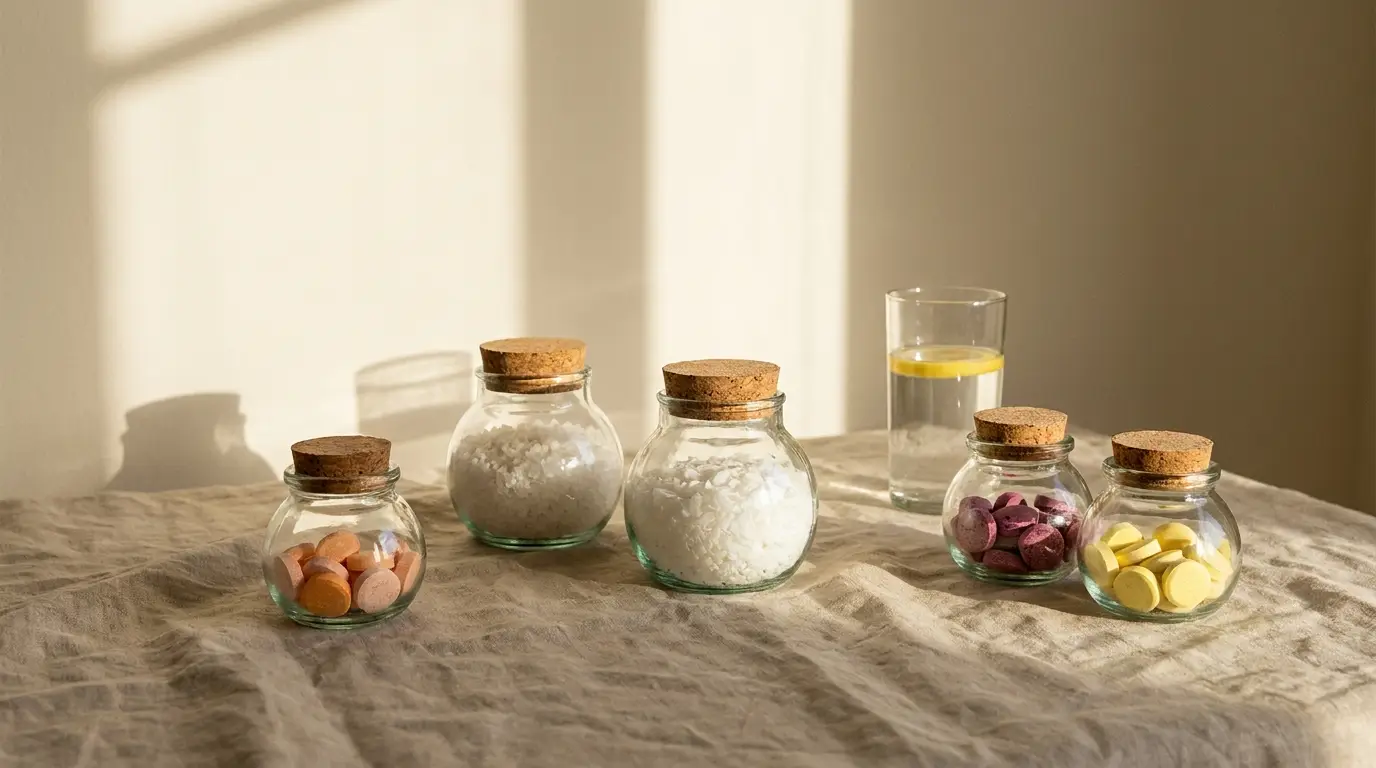
Why electrolytes matter more than water during a fast
When you eat normally, food provides electrolytes continuously: salt in almost everything, potassium in fruits and vegetables, magnesium in nuts and grains. During a fast, that supply stops cold.
Worse: your body actively excretes more water and sodium during the first days of fasting (diuretic effect of the insulin drop). Result: most of the headaches, fatigue, and dizziness blamed on "fasting" are actually electrolyte deficiency symptoms, not lack of food.
The Three Electrolytes That Matter Most
During a fast, your body loses electrolytes faster than it loses water. Three of them do most of the heavy lifting:
| Electrolyte | Daily amount | Role and deficiency symptoms |
|---|---|---|
| Sodium | 3 to 5 g per day during extended fasts | Maintains blood volume and nerve function. Low sodium = the #1 cause of headaches and fatigue during fasts. |
| Potassium | 1 to 3 g per day | Muscle and heart function. Low potassium = muscle cramps, weakness, heart palpitations. |
| Magnesium | 300 to 500 mg per day | Sleep quality, muscle relaxation, energy production. Low magnesium = poor sleep and night cramps. |
"Snake juice" and other DIY recipes
Experienced fasters often mix their own electrolytes. The basic recipe, called "snake juice" (Cole Robinson):
- 2 L of water
- 2 g pink Himalayan salt (or sea salt)
- 1 g potassium chloride ("No Salt" at the grocery store)
- 1 g baking soda
- 0.5 g magnesium sulfate (food-grade Epsom salt)
Drink throughout the day. Tastes mediocre but works. Cost: about 50 cents per day vs about $2 for a commercial packet.
The "lazy" version
If the recipe is too much hassle, here's the lazy version that works nearly as well:
- Add a pinch of salt (½ tsp) to your water, twice a day
- Take a magnesium glycinate supplement at night (300 mg)
- Drink a salty beef or chicken broth in the afternoon
Commercial options
If you prefer a ready-to-drink product:
- LMNT: the gold standard for fasters. Sugar-free, optimal ratios. Expensive but no shortcuts.
- Re-Lyte (Redmond): similar alternative, often considered tastier.
- Ultima Replenisher: less sodium, more accessible, many flavors.
- Avoid: Gatorade, Powerade, Vitaminwater, sugar-laden "hydration" drinks. Anything with sugar will break your fast.
When to take your electrolytes
On waking
First thing: a large glass of salted water. This is when your body has lost the most sodium overnight. Bonus: it wakes you up fast.
Before a workout
30 minutes before: 500 ml of water + salt + potassium. Otherwise, prepare for cramps and fatigue.
Mid-afternoon
The 3 PM "crash" is almost always electrolyte deficiency or dehydration. A glass of salted water often makes the difference.
Before sleep
Magnesium glycinate (300 to 400 mg). Improves sleep during fasts, reduces night cramps.
Conclusion: salt is your friend
The golden rule for a successful fast: don't skimp on electrolytes. Most people who "can't fast" without headaches and feeling drained are simply deficient in sodium and magnesium. Add salt. Drink broth. Take your magnesium at night. The difference is immediate.